

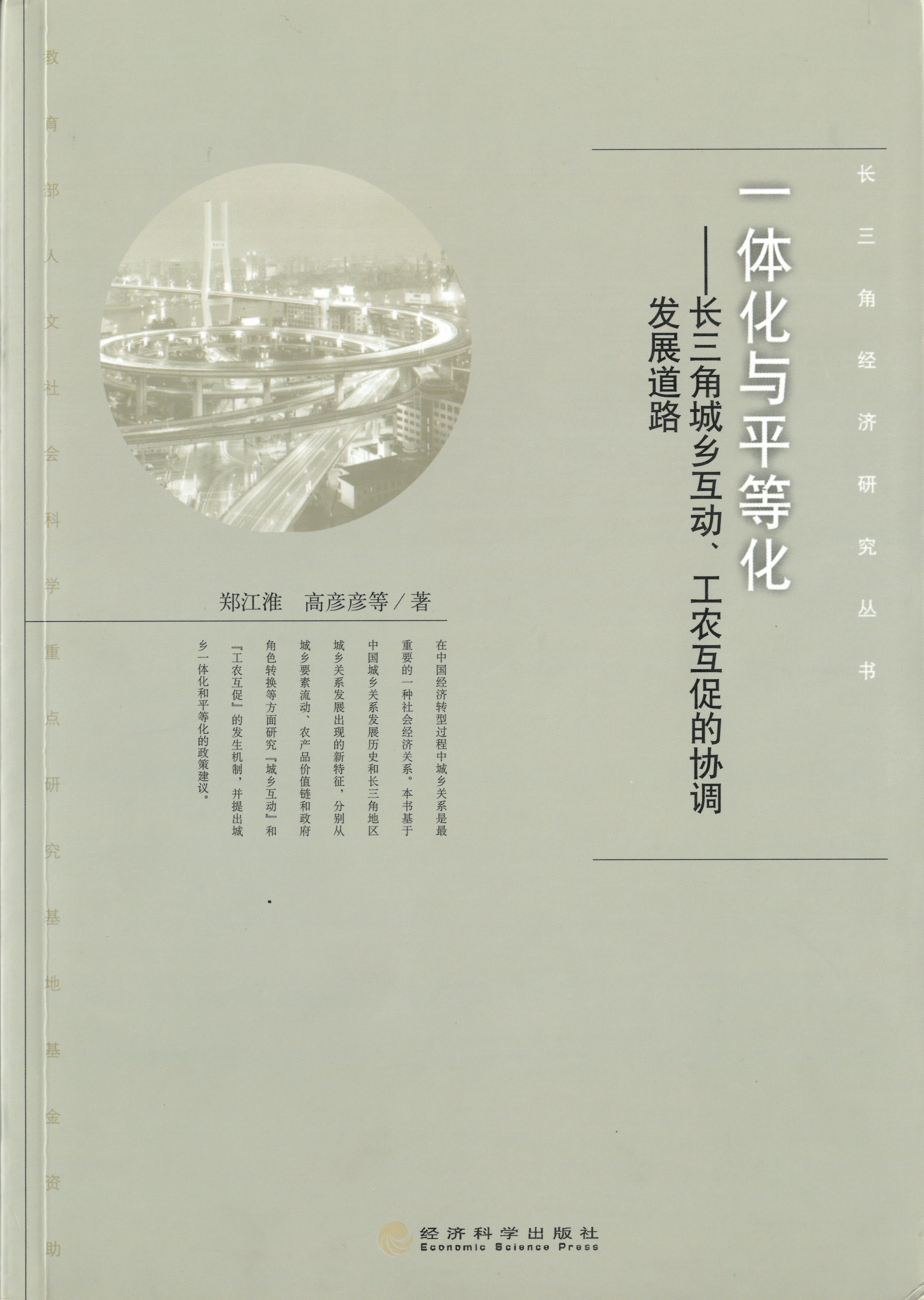
The book examines the effect of urban-rural labor flow, rural land transfer, migrant workers’ returning home as entrepreneurs and group loans on agricultural upgrading, as well as the supply and demand of agricultural technology, rural income growth and rural social welfare from the perspective of factor allocation optimization. The book also discusses agricultural value chain integration methods and the experience of developed countries in the context of agricultural organization and industrialization; and also examines the origins of the endogenous unequal urban-rural relationship from the viewpoint of political system and behaviors. It not only undertakes a general examination into the causes of the unequal urban-rural relationship in China, but also does a thorough theoretical and empirical analysis on the phenomenon of migrant workers returning from cities to their hometowns to launch their own businesses, and topics such as agricultural technology and inadequate supply of agricultural credit in the Yangtze River Delta. Meanwhile, it also offers pertinent policy suggestions to address the aforementioned matters.

