

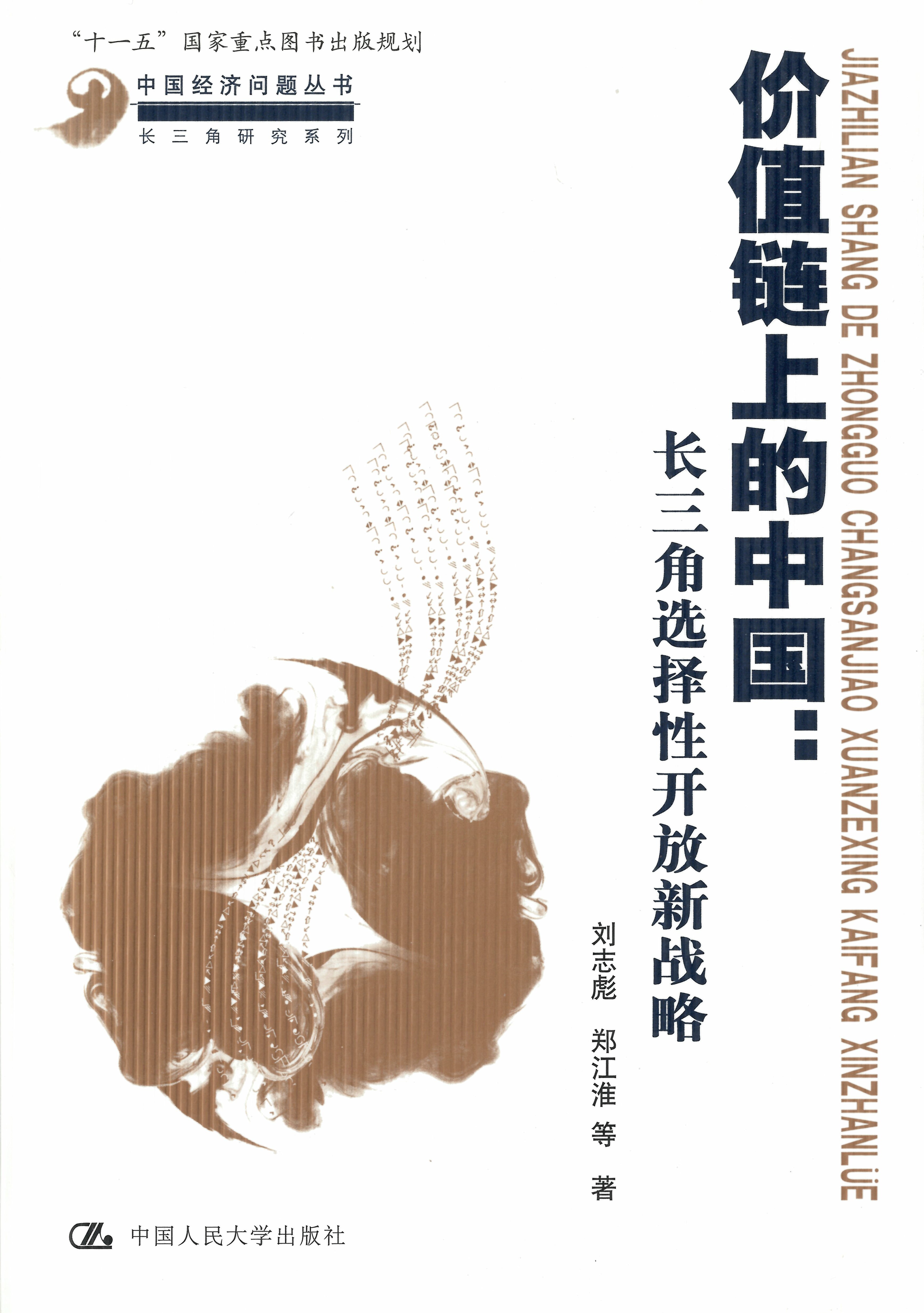
Since China’s admission into WTO, the country's manufacturing sector has been able to participate in the global value chain, resulting in rapid economic expansion in China. The manufacturing sector in the Yangtze River Delta is also becoming further entwined in global intra-product specialization. Among the growing capital formation in the region, foreign direct investment (FDI) has generated positive backward spillovers and negative forward spillovers in regards to domestic enterprises. However, a particularly low-price labor force has led to the creation of an asset bubble in the country as an exporter of technology and an imbalance in the structure of the national income distribution. This has, for the most part, weakened China’s independent economic development initiative. The book, from the viewpoint of the global value chain, proposes the acceleration of the construction of a domestic demand-based NVC (National Value Chain) network system and governance structure. We have to modify the existing practices of offering priority, and constructing competitive edges on developing primary and general production factors to implement the opening-up strategy, and instead turn to vigorously creating, absorbing and utilizing advanced and specialized production factors. This is a fresh strategic choice for the nation to ascend the global value chain and create an open economy.
The book puts forward the idea that it is challenging to automatically push the industrial structure up to the high value-added end of the global value chain through merely following the comparative advantage strategy. Thus, China ought to utilize a strategic industrial policy. This proposes that China has to play to its benefits of industrial agglomeration and scope economy, utilize a path of scale and collectivization development and make total use of the agglomeration benefit of innovative human resources in the key areas while growing strategic emerging industries. Using strategic approaches, such as reverse R&D outsourcing, providing total play to local benefits and standardizing the employment system, least developed countries and their contract manufacturers will be able to overcome the late-starting drawbacks, and further achieve brand upgrading and strengthen their autonomous technical capacity. Manufacturing and retail enterprises should establish all-round cooperation for participation in the international labor division and trade through their own industrial chains, gradually replacing low-price foreign procurement with independent distribution, and replacing OEM production with self-owned brands. However, foreign enterprises’ establishment of R&D institutions in the country to utilize its low R&D cost will generate further crowding-out and a complementary effect on the value chain of domestic enterprises. In this scenario, domestic enterprises must take relevant action for patent protection, set up a benefit-sharing mechanism, develop headquarters economy through urban agglomerations, and enhance corporate competitiveness to ascend the value chain.

